


Summary of works
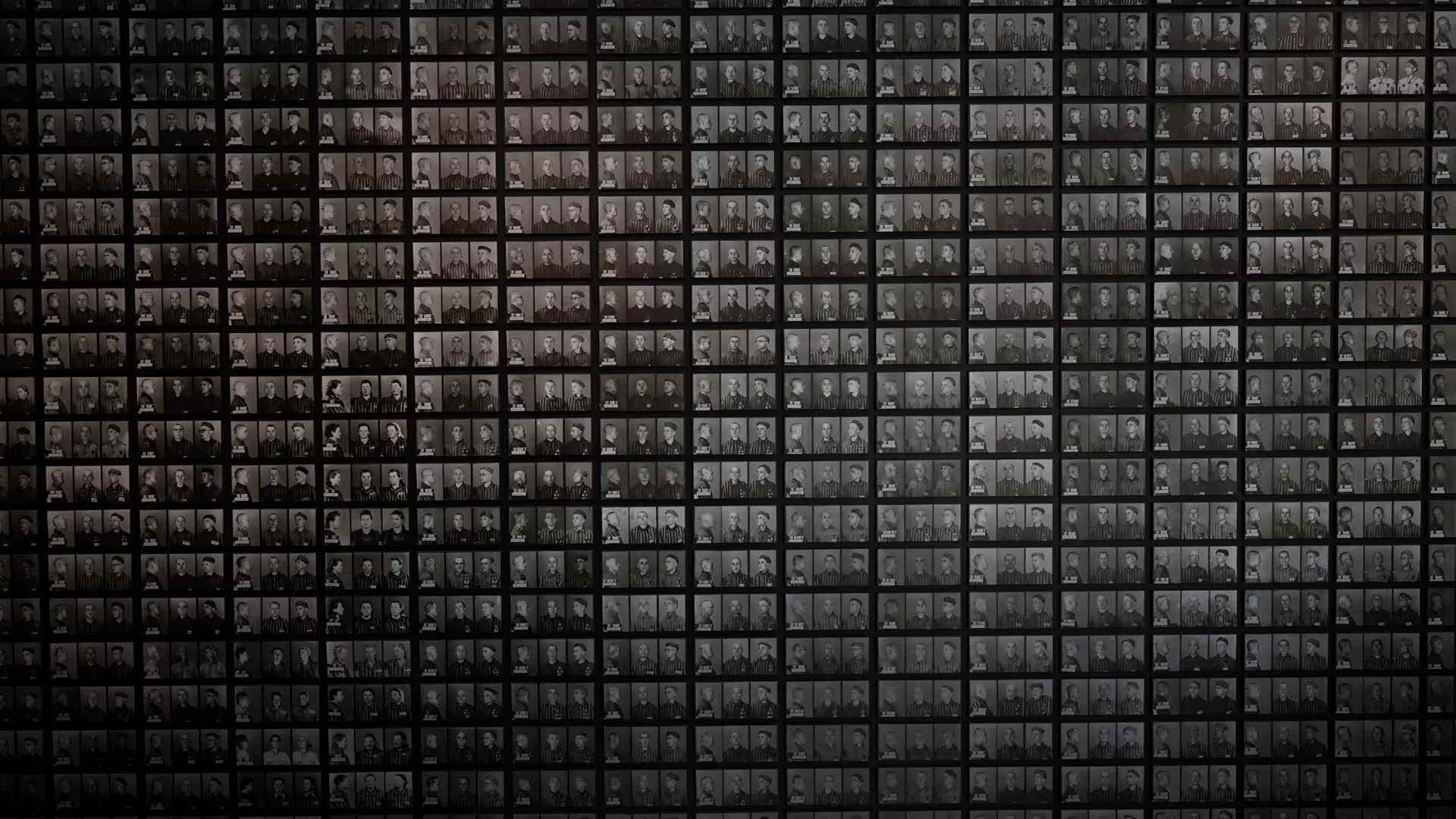
To date, the Auschwitz-Birkenau Foundation has been financing 56 conservation projects at the Auschwitz-Birkenau Memorial and Museum. These projects can be grouped into eight main categories, reflecting the scope and diversity of preservation work carried out at the former camp site.
Buildings at Auschwitz I
This group includes conservation and restoration of historic brick camp blocks and other structural elements at the former Auschwitz I camp. Works cover structural stabilization, conservation of architectural details, preservation of original interiors, wall paintings, and technical infrastructure necessary for long-term protection.
Brick Barracks at Auschwitz II-Birkenau
Projects in this category focus on the preservation of the original brick barracks in Birkenau (section BI). The work includes structural reinforcement, conservation of masonry, protection of historic fabric, and safeguarding of authentic construction elements.
Wooden Structures at Auschwitz II-Birkenau
This group covers the conservation of wooden barracks and guard towers, including the stabilization of wooden construction elements, replacement or reinforcement of damaged components, and protection against biological degradation and environmental impact.
Section BI at Auschwitz II-Birkenau
A comprehensive and multi-stage conservation program covering the entire historic BI sector in Birkenau. It includes the preservation of infrastructure, roads, drainage systems, and other elements integral to the historical layout of the camp.
Ruins of the gas chambers and crematoria
Projects dedicated to the conservation and stabilization of the preserved ruins of gas chambers and crematoria at Birkenau. The work focuses on structural protection, securing exposed remains, preventing further deterioration, and ensuring respectful and sustainable preservation of these key historical relics.
Conservation of museum objects and archival materials
This group encompasses the preservation of original camp artefacts and archival records held by the Museum. Conserved items include suitcases, shoes, textiles, metal objects, Zyklon B cans, personal belongings of victims, archaeological finds, as well as camp documents, plans, and records. The projects also include digitization and preventive conservation measures.
Regulation of water regime
Given the challenging hydrological conditions of the Birkenau site, several projects addressed water management. These works include drainage systems, stabilization of groundwater levels, and protection of historic structures from moisture-related damage.
Conservation of historic greenery
This category involves the preservation and management of historic vegetation within the Memorial site. The work ensures that greenery is maintained in a way that respects the authenticity of the landscape while preventing damage to historic structures and archaeological remains.
Through these projects, the Foundation has supported a comprehensive and long-term conservation program aimed at preserving the authenticity, integrity, and historical significance of the Auschwitz-Birkenau Memorial for future generations.
Through these projects, the Foundation has supported a comprehensive and long-term conservation program aimed at preserving the authenticity, integrity, and historical significance of the Auschwitz-Birkenau Memorial for future generations.
History of financial support provided by the Auschwitz-Birkenau Foundation for conservation projects at the Auschwitz-Birkenau Museum
(amounts shown in PLN):
(amounts shown in PLN):
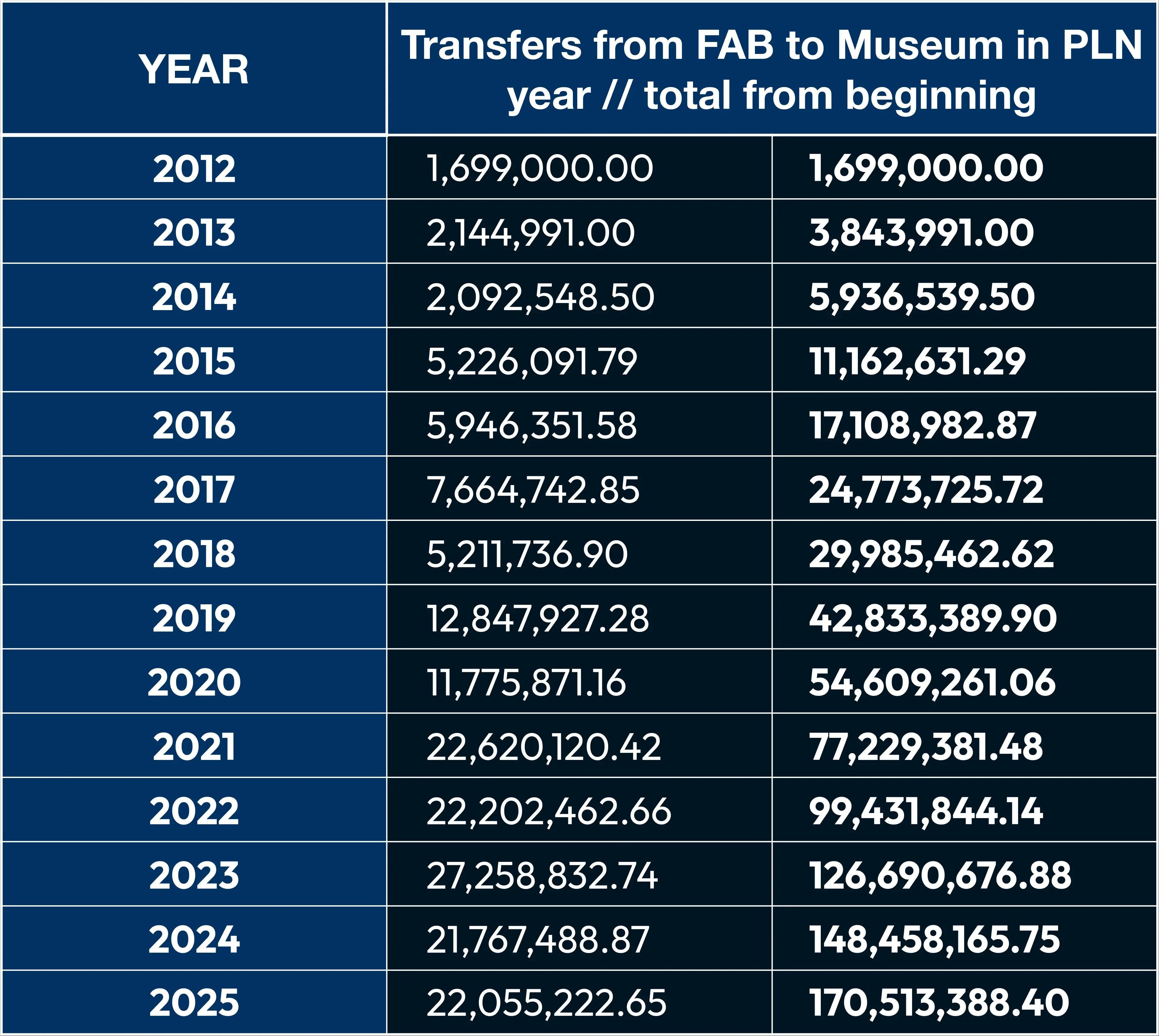
Breakdown of conservation work costs:

Supported by





© 2026 Auschwitz-Birkenau Foundation
